
Whole animals, cut by hand
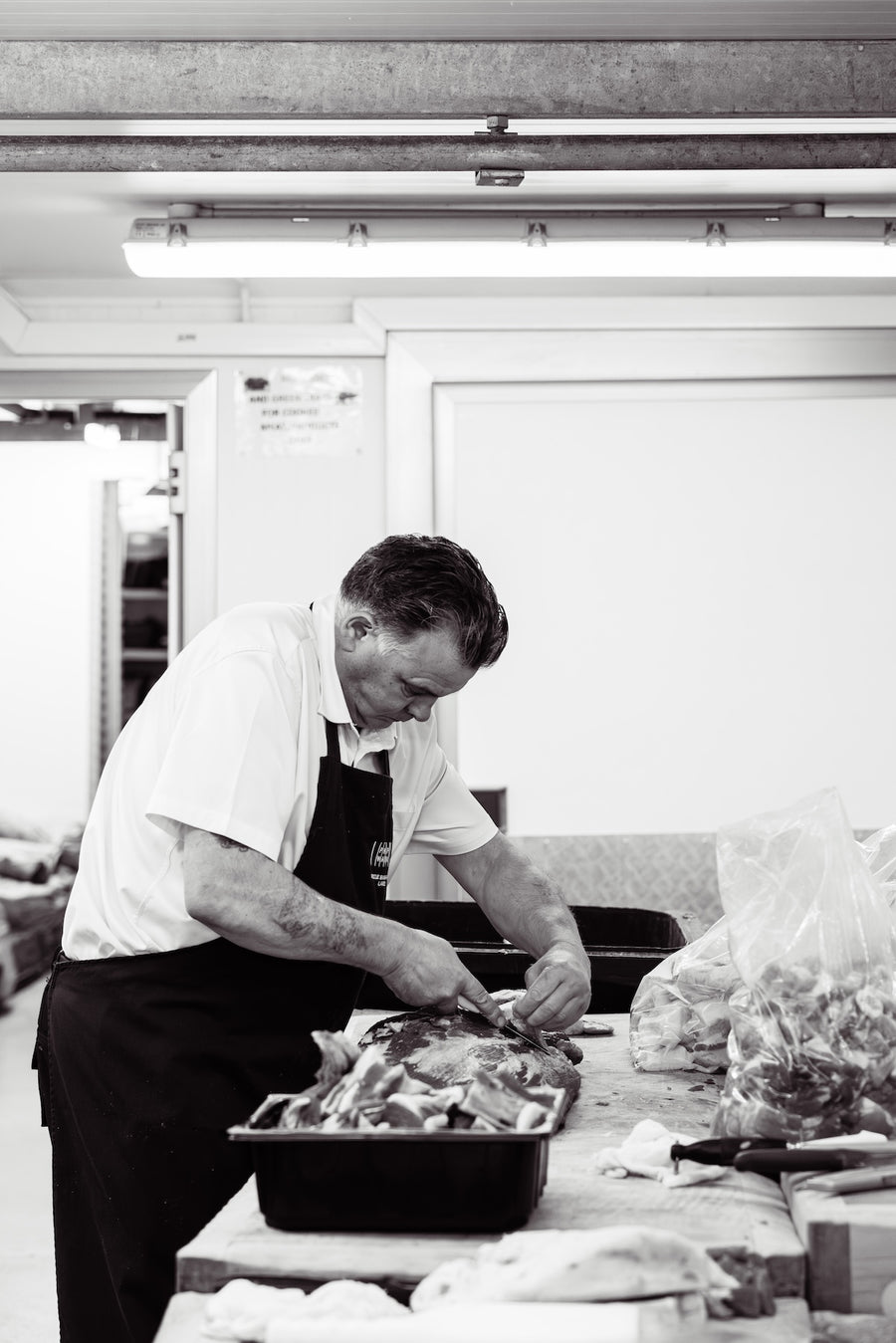
A butcher's shop is only ever as good as the hands in it. Behind our counter is the room where whole carcasses are broken down, hung and aged, and every cut you buy is made by people who trained for years to do it.
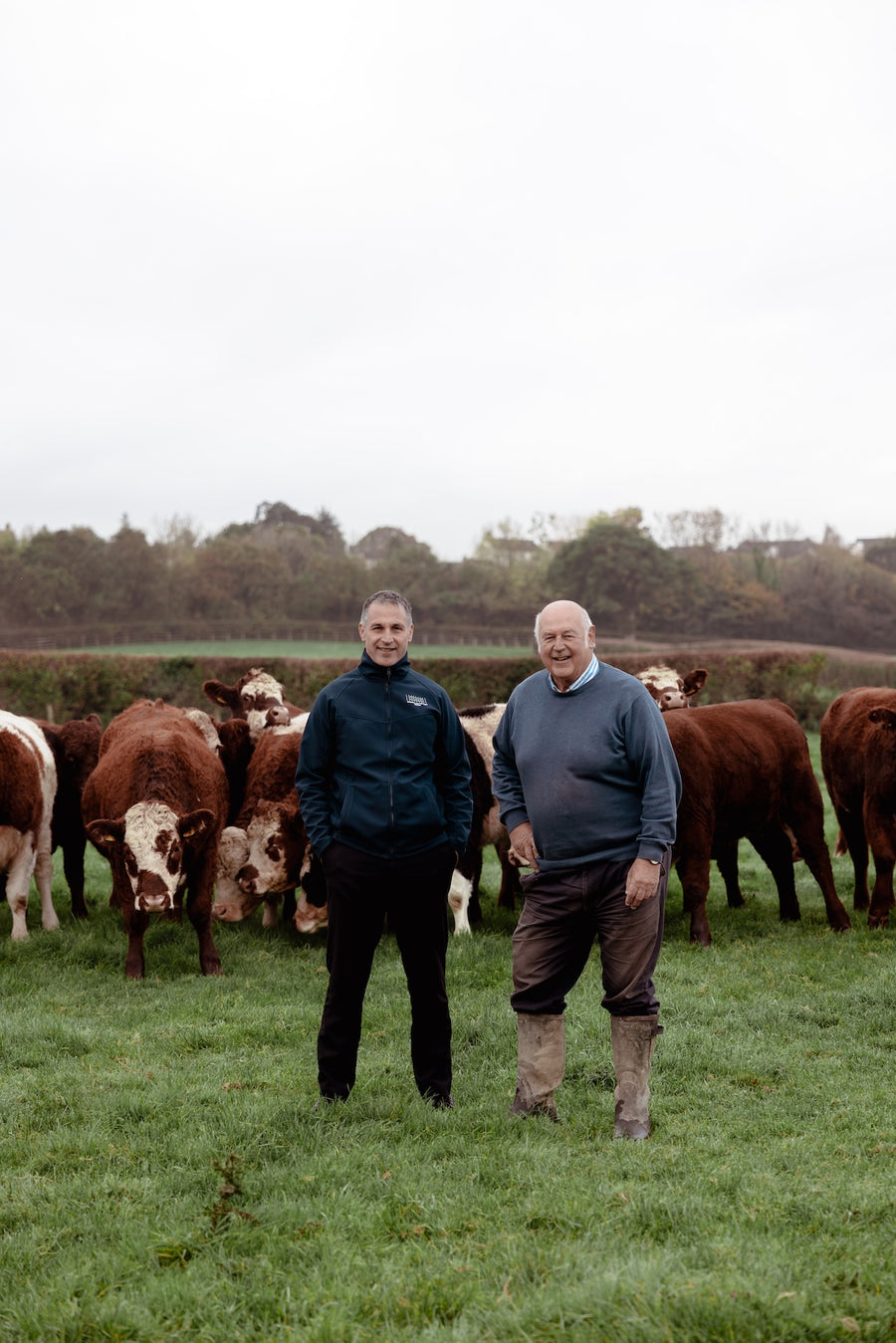
We buy the whole animal
We do not buy boxed, pre-cut meat. Whole carcasses arrive from our own farms and our partner farmers, and they are broken down here, on our blocks, by our butchers.
It is slower and it is harder. It also means nothing is wasted, and every cut can be prepared exactly the way it should be.
From carcass to counter
Selection
Animals are chosen on the farm, for breed, condition and the fat that proper ageing needs.
Hanging
Beef hangs on the bone for a minimum of twenty-eight days, often much longer, in our own ageing rooms.
Breaking down
A butcher breaks the side into primals, then into the cuts you know, following the muscle by hand.
The counter
Cut to order, trimmed and presented. What you ask for is cut in front of you, not lifted from a pack.
The fat is the whole point
Dry ageing draws moisture out and concentrates flavour, while natural enzymes tenderise the meat. It only works if the animal carries enough fat to protect it through the process.
Native breeds carry more fat than commercial cattle. That is exactly why supermarkets reject them, and exactly why they age so beautifully. Breed and craft, working together.
How we age
On the bone
Sides hang whole on the bone, not vacuum packed. The bone and fat protect and flavour the meat.
Cold and still
Kept at a steady low temperature with moving air, for weeks, in our own ageing rooms.
Twenty-eight days up
Twenty-eight days is our minimum. Many cuts hang for fifty, seventy, on rare occasions a hundred.
Cut to order
Only when you order is the aged beef cut, trimmed and weighed. Never before.
It starts on the farm.
Native breeds, slow grown, carrying the fat that makes this craft possible. See how sourcing shapes everything we cut and age.